
Robert Hall and Michael Woodford Awarded the 2026 Nobel Prize in Economic Sciences
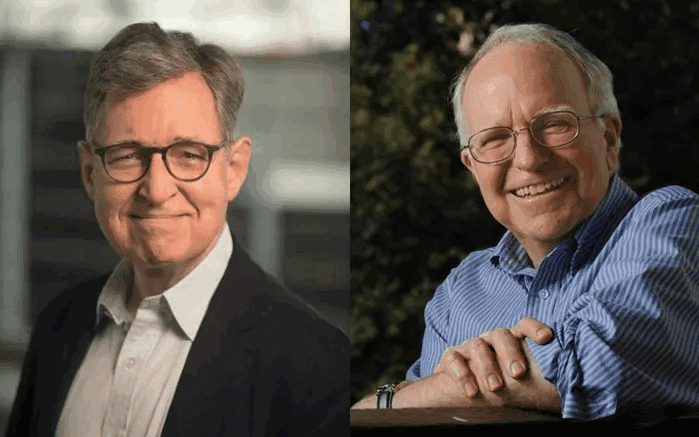
On 12 October 2026, the Royal Swedish Academy of Sciences announced that the Nobel Prize in Economic Sciences, officially the Sveriges Riksbank Prize in Economic Sciences in Memory of Alfred Nobel, had been awarded to the American economists Robert E. Hall and Michael Woodford in recognition of their contributions to establishing the microeconomic foundations of macroeconomic stabilization policy. The laureates developed macroeconomic models that improved the capacity of governments and central banks to deploy fiscal and monetary policy in a timely manner so as to dampen economic fluctuations, and these models have since become the basis of the frameworks used by central banks and governments around the world.
Robert Hall, born in 1943, is Professor Emeritus of Economics at Stanford University and a Senior Fellow at the Hoover Institution. His research centers on business cycles, labor economics, and consumption. Michael Woodford, born in 1955 in Massachusetts, is Professor of Political Economy at Columbia University, where he works in monetary economics and behavioral macroeconomics.
From Keynes to the Crisis of the 1970s
Keynesian thought, named after John Maynard Keynes, emerged in response to the failure of prevailing economic theories to anticipate the Great Depression of 1929. The neoclassical school, dominant at the time, held that markets are fully efficient and possess self-correcting mechanisms, thereby leaving little room for government intervention. Keynes, by contrast, argued that governments and central banks play an essential role in helping markets correct their imbalances, and his ideas established the rationale for government intervention to address market failures. Economic policy relied successfully on Keynesian models until the 1970s, when Western economies, in the wake of the oil crises, confronted stagflation, that is, the simultaneous rise of unemployment and inflation. These models proved unable to reduce unemployment and instead gave rise to runaway inflation. This outcome contradicted the inverse relationship between inflation and unemployment that had been incorporated into Keynesian models through the Phillips curve.
The central shortcoming was that these models rested on statistical relationships among aggregate variables and assumed that individuals form their expectations by looking backward. In 1976, Robert Lucas published his seminal paper, which came to be known as the Lucas critique, demonstrating that such relationships shift whenever policy itself changes, because individuals adjust their behavior in line with their expectations. He called for macroeconomic models to be built on microeconomic foundations that reflect the decisions of households and firms.
Hall and Forward-Looking Consumer Behavior
It was in this context that Hall made his pioneering contribution in 1978. His starting point was Milton Friedman’s permanent income hypothesis, which holds that individuals distribute their consumption smoothly over time according to their expected long-term income rather than their current income, a pattern known as consumption smoothing. Empirical applications of this hypothesis had typically measured permanent income using income from previous periods. Hall’s key contribution lay in abandoning the assumption that past income has predictive power for future consumption. He substantiated this by devising a direct test of forward-looking consumption behavior, through which he showed that historical data carry no predictive power for future consumption. In so doing, Hall incorporated the rational expectations hypothesis, namely that individuals make use of all the information available to them, and concluded that changes in consumption cannot be predicted, which is to say that consumption follows a random walk.
If individuals have already incorporated into their decisions everything they know about the future, their consumption will change only when new and unanticipated information arrives that alters their estimate of permanent income, such as an unexpected promotion or the loss of a job. An anticipated wage increase, by contrast, will already have been reflected in consumption before it materializes, while temporary shocks such as one-off bonuses have only a modest effect because they change permanent income only marginally. Hall tested these predictions using aggregate consumption data for the United States and found that consumption in the current period is the best predictor of consumption in the following period and that past income adds no predictive power. Stock prices, however, exhibited limited predictive power, which led him to propose a slightly modified version of the theory.
These findings carry considerable policy significance, since private consumption is usually the largest component of aggregate demand. According to the theory, policies influence consumption only to the extent that they influence permanent income. Individuals are therefore likely to save a large share of temporary income gains resulting from tax cuts or temporary transfers, whereas permanent policies exert a larger effect. Subsequent studies have shown that consumption is more predictable than the strict version of the hypothesis implies, yet Hall’s model has remained the benchmark against which such deviations are measured.
Woodford and the New Keynesian Model
Woodford built on Hall’s theory and integrated it into a comprehensive macroeconomic model. On the demand side, household spending today is determined by expectations about future income and by current and expected real interest rates. On the supply side, firms set their prices on the basis of their costs and their expectations of future inflation. By modelling aggregate demand and aggregate supply from this forward-looking perspective, Woodford played a pivotal role in developing the New Keynesian model, beginning with his joint work with Julio Rotemberg and culminating in his 2003 book Interest and Prices.
The model draws its core framework from real business cycle theory, the embodiment of the new classical approach to understanding the economy, which was developed by Finn Kydland and Edward Prescott, recipients of the Nobel Prize in 2004. This theory holds that recessions are not market failures but optimal responses by households and firms to technology shocks, and that flexible prices and wages automatically return the economy to its path, leaving economic policy with little meaningful role. Woodford, however, relaxed two of its assumptions. The first is perfect competition, as firms in his model exercise a degree of control over their prices. The second, and more important, is price flexibility, which he replaced with the concept of sticky prices. Under this concept, firms do not adjust their prices immediately, because doing so is costly owing to contractual commitments and the costs of changing prices (menu costs), and they therefore revise them only at infrequent intervals.
Through these two modifications, Woodford succeeded in bridging the long-standing divide between the neoclassical and Keynesian schools, and economic policy regains a clear role. Natural output is defined as the level of output that would prevail if prices were fully flexible, and the task of policy is to limit the economy’s deviation from it. Should a financial crisis weaken consumer confidence, causing demand to fall and saving to rise, firms would be unable to lower their prices quickly enough and would resort instead to cutting production. The productive capacity of the economy would remain unchanged, since workers, machinery and technology are all still in place, yet actual output would fall below its natural level. At this point, the central bank intervenes by lowering interest rates and announcing that it will keep them low for a period to come, a practice known as forward guidance, which leads forward-looking households to increase their current spending in accordance with Hall’s reasoning. What distinguishes this framework from traditional Keynesianism is that fluctuations in supply and demand originate in the rational decisions of forward-looking households and firms, rather than in fixed statistical relationships or in the “animal spirits” that Keynes invoked to explain investment decisions.
The work of Hall and Woodford has thus deepened our understanding of the sources of economic shocks and the mechanisms through which they propagate. It has also provided a robust theoretical foundation for the models that central banks and governments rely on today in designing stabilization policies and in responding to shocks such as energy crises and sudden changes in household spending.
Further Reading
- The Committee for the Prize in Economic Sciences in Memory of Alfred Nobel. (2004). Finn Kydland and Edward Prescott’s Contribution to Dynamic Macroeconomics: The Time Consistency of Economic Policy and the Driving Forces Behind Business Cycles. The Royal Swedish Academy of Sciences. Retrieved from https://www.nobelprize.org/uploads/2018/06/advanced-economicsciences2004.pdf
- The Committee for the Prize in Economic Sciences in Memory of Alfred Nobel. (2026, October 12). Microeconomic Foundations of Macroeconomic Stabilization: Scientific Background on the Sveriges Riksbank Prize in Economic Sciences in Memory of Alfred Nobel 2026. The Royal Swedish Academy of Sciences. Retrieved from https://www.nobelprize.org/uploads/2026/10/advanced-economicsciencesprize2026.pdf
- Friedman, M. (1957). A Theory of the Consumption Function. Princeton University Press. Retrieved from https://www.nber.org/books-and-chapters/theory-consumption-function
- Hall, R. E. (1978). Stochastic Implications of the Life Cycle-Permanent Income Hypothesis: Theory and Evidence. Journal of Political Economy, 86(6), 971-987.
- Keynes, J. M. (1936). The General Theory of Employment, Interest and Money. Palgrave Macmillan.
- Kydland, F. E., & Prescott, E. C. (1982). Time to Build and Aggregate Fluctuations. Econometrica, 50(6), 1345-1370. https://doi.org/10.2307/1913386
- Woodford, M. (2003). Interest and Prices: Foundations of a Theory of Monetary Policy. Princeton University Press.